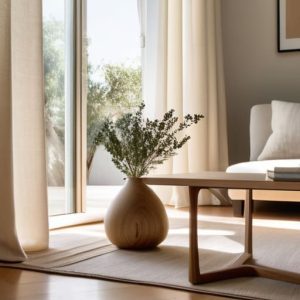

Most people think that learning how to make your home cozy requires a massive budget, a Pinterest board full of “aesthetic” clutter, and a dozen expensive scented candles that give you a headache. I see it all the time: people overcomplicating their living spaces with useless decor that actually creates more friction in their daily lives. If you have to move three decorative pillows just to sit down and read a book, your system is broken.
I’m not here to sell you on a lifestyle makeover or a shopping spree. Instead, I want to show you how to apply a bit of systems engineering to your living room to strip away the chaos. I’ll be sharing my personal, no-nonsense approach to creating a space that actually serves you, focusing on low-friction layouts and sensory triggers that work in the real world. We’re going to build a home that feels like a sanctuary, not a showroom.
Table of Contents
Mastering Warm Lighting for Living Rooms Without the Clutter
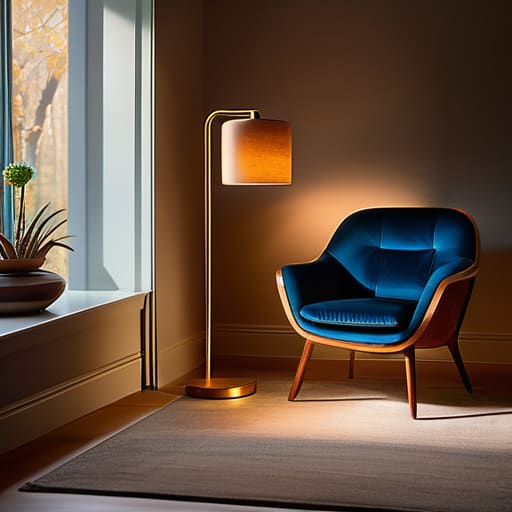
Most people make the mistake of relying on a single, harsh overhead light that turns their living room into a sterile office space. If you want to actually relax, you need to ditch the “big light” and start thinking in layers. I always tell my clients to focus on warm lighting for living rooms by placing small, intentional light sources at different heights—a floor lamp by the reading chair, a small task lamp on a side table, and maybe some dimmable LED strips behind the media console. This creates depth without adding a single piece of unnecessary clutter to your floor plan.
The goal here isn’t to decorate; it’s to control the atmosphere. When you use bulbs with a lower Kelvin rating (around 2700K), you’re essentially engineering a mood that signals to your brain it’s time to wind down. By keeping the fixtures minimal and functional, you achieve a minimalist cozy aesthetic that feels intentional rather than messy. It’s about stripping away the glare and replacing it with a soft, steady glow that actually serves your need for rest.
Textile Layering Techniques That Actually Reduce Friction
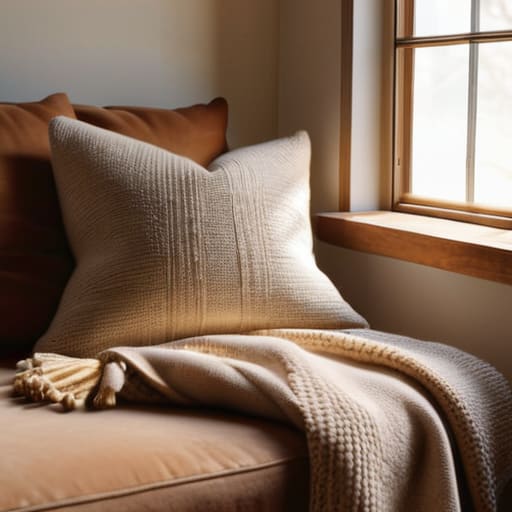
Most people treat blankets and pillows like decor you just toss on a sofa to look good for guests. That’s a mistake. If you want to actually create a sanctuary at home, your textiles need to serve a functional purpose. I look at it through the lens of systems: every layer should have a reason for being there. Instead of a mountain of mismatched cushions, I stick to a few high-quality textures—a heavy linen throw for summer evenings or a chunky wool knit for winter. The goal is to minimize the decision fatigue of “nesting” every time you sit down.
When you implement textile layering techniques, focus on the tactile transition. You want a mix of weights and weaves that respond to your immediate needs. A smooth cotton cushion paired with a rugged wool rug creates a sensory contrast that feels intentional rather than cluttered. This is a core part of a minimalist cozy aesthetic; you aren’t adding more stuff, you’re just adding more depth. If a textile doesn’t make the space feel more efficient or more comfortable, it doesn’t belong in the system.
Three Low-Friction Ways to Ground Your Space
- Curate a “Sensory Anchor” instead of a decor collection. Pick one high-quality scent—think cedar or sandalwood—and one tactile element, like a heavy wool throw. Don’t scatter dozens of knick-knacks across every surface; just pick a few intentional pieces that signal to your brain that it’s time to decompress.
- Optimize your “Transition Zones.” The entryway is where the day’s stress accumulates. Instead of letting mail and keys pile up on the dining table, set up a single, dedicated landing station. If your entryway is organized, you leave the chaos of the outside world at the door, making the rest of your home feel instantly more peaceful.
- Bring the outside in, but keep it controlled. A few well-placed, hardy plants can breathe life into a room, but don’t turn your living room into a high-maintenance jungle. Stick to low-maintenance varieties like snake plants or pothos. You want the calming effect of greenery without adding another complex maintenance schedule to your plate.
The Bottom Line
Stop chasing a “Pinterest look” and start designing for how you actually move through your rooms; if a design choice adds friction to your daily routine, it’s not cozy, it’s just a chore.
Focus on high-impact, low-maintenance upgrades—like smart lighting and quality textures—that work for you automatically, rather than adding more stuff you have to manage.
## The Core Philosophy of Comfort
“Cozy isn’t about how many throw pillows you can cram onto a sofa; it’s about removing the friction between you and your rest. A truly comfortable home is a system that works so quietly in the background that you finally have the mental space to actually inhabit it.”
Gregory Scott Miller
Stop Overthinking the Aesthetics
At the end of the day, making a home cozy isn’t about buying a curated collection of expensive pillows or following a designer’s mood board. It’s about the systems we’ve discussed: managing your lighting to set the right mood and layering textiles that actually serve a functional purpose. When you focus on reducing friction—whether that’s through better light placement or textures that invite you to sit down—you stop fighting your environment and start living in it. Keep it simple, keep it intentional, and prioritize function over fluff.
Don’t feel like you have to overhaul your entire house by next weekend. Optimization is a process, not a single event. Start with one corner, one lamp, or one soft throw, and see how it changes the way you move through that space. Your home should be a tool that recharges you, not another project on your endless to-do list. Build a space that actually works for you, and the coziness will follow naturally.