
I spent most of my twenties thinking I needed a more sophisticated digital calendar or a $30 productivity app to fix my life, but that was just another way to avoid the actual work. Most of the advice you find online about how to stop procrastinating is just more noise—complex frameworks and “hacks” that require more maintenance than the tasks they’re supposed to solve. If you’re looking for a magical ritual or a way to “fix” your brain through sheer willpower, you’re going to be disappointed. The truth is, procrastination isn’t a character flaw; it’s usually just a failure of your environment to support your intentions.
I’m not here to sell you a subscription or a new way to color-code your life. I want to show you how to apply a bit of systems engineering to your daily routine to strip away the friction that keeps you stuck. We’re going to focus on practical, low-tech adjustments to your space and your workflow that actually move the needle. My goal is to help you build a setup where doing the work becomes the path of least resistance, so you can finally stop fighting yourself and get things done.
Table of Contents
Solving Task Paralysis by Removing Environmental Friction

Most people think they have a willpower problem, but more often than not, they have a setup problem. When I’m staring at a project and can’t seem to move, it’s rarely because I’ve suddenly lost my drive; it’s because my environment is screaming at me with distractions. If your desk is buried under mail, your phone is buzzing with notifications, and your laptop has twenty tabs open, you aren’t just “lazy”—you are fighting a losing battle against your own surroundings. This is a core component of overcoming task paralysis: you have to stop treating your brain like a machine that can run on pure grit and start treating it like a system that needs a clean input.
Instead of searching for more complex time management techniques, try a “friction audit.” Look at the physical and digital hurdles between you and your work. If you need to write a report but your charger is in another room, that’s friction. If you need to focus but your workspace is a mess of half-finished projects, that’s friction. My rule is simple: design your space for the task at hand. Clear the visual noise, put the phone in a drawer, and prep your tools the night before. When you remove the small, annoying obstacles, you stop fighting your environment and finally start doing the work.
Ditching Perfectionism for Real World Executive Dysfunction Strategies

We need to have a serious talk about the lie we tell ourselves: that we aren’t working because we’re “lazy.” Most of the time, it’s actually a struggle with executive dysfunction strategies that don’t account for how our brains actually function under pressure. We sit there, staring at a project, waiting for the “perfect” moment or the “perfect” mental clarity to strike. But perfectionism is just procrastination in a fancy suit. It’s a defense mechanism designed to protect us from the fear of doing a mediocre job, and it’s the fastest way to ensure you do nothing at all.
Instead of trying to force a state of flow, I’ve learned to embrace the “messy middle.” If you’re stuck, stop looking for the best way to do the task and just find the easiest way to start it. I call this the “low-fidelity approach.” Don’t worry about the polished final product; just aim for a version that is barely functional. Once you break the seal of inaction, the momentum usually takes over. When you’re dealing with perfectionism, your goal isn’t excellence—it’s simply movement.
Three Low-Friction Tactics to Get Moving
- Stop over-planning and start “micro-tasking.” When a project feels like a mountain, your brain naturally wants to retreat. Instead of writing “Clean the Garage” on your list, write “Move three empty boxes to the bin.” Make the first step so small it feels almost insulting to your intelligence. Once the momentum starts, the friction disappears.
- Use the “Two-Minute Rule” for digital clutter. If a notification or an email requires a response that takes less than two minutes, do it immediately. Don’t add it to a list, don’t “flag” it for later, and don’t let it sit in your mental queue. Clearing these tiny tasks prevents the cognitive load from building up into that overwhelming sense of dread.
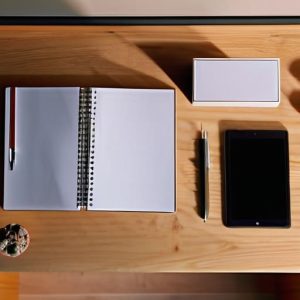
- Designate a “Launchpad” for your most important tasks. If you know you need to work on a specific report tomorrow morning, set your notebook, your tactical pen, and your laptop on your desk tonight. By prepping your physical workspace, you’re removing the small, annoying decisions that usually serve as excuses to keep scrolling on your phone instead of starting.
The Bottom Line
Stop looking for a magic app to fix your focus; start by cleaning up the physical and digital clutter that’s making it hard to start in the first place.
Perfection is a productivity killer—aim for a “good enough” system that actually gets moving rather than a flawless one that stays stuck on paper.
The System Over the Willpower
Stop waiting for a burst of motivation that isn’t coming. Motivation is a fickle guest; a well-designed system is a reliable partner. If you can’t start the task, don’t try to fix your mindset—fix your environment.
Gregory Scott Miller
Stop Planning and Start Doing
At the end of the day, procrastination isn’t a character flaw or a lack of willpower; it is almost always a failure of your systems. We’ve looked at how clearing physical clutter can stop task paralysis and why trading perfectionism for “good enough” is the only way to manage executive dysfunction. You don’t need a more sophisticated app or a complex new morning routine to fix this. You just need to strip away the friction that stands between you and the task at hand. Focus on making the first step so small and the environment so supportive that resistance becomes harder than action.
My advice is simple: stop waiting for the “right” moment or the perfect burst of motivation to strike. Motivation is a fickle friend that rarely shows up when you actually need it. Instead, rely on the systems you build today to carry you through the days when you feel like doing nothing. Build a life that works for you, not against you. Now, close this tab, put down your phone, and just do one small thing.