
I spent three years in corporate logistics watching people drown in “efficiency” software that actually just created more work. I see the same thing happening now with the endless stream of productivity influencers peddling $30 planners and complex digital ecosystems. Most of this advice is just expensive noise. If you’re struggling with productivity working from home, the answer isn’t a new app or a more expensive standing desk; it’s about stripping away the friction that’s quietly sabotaging your focus.
I’m not here to sell you a lifestyle or a complicated ritual. Instead, I’m going to share the practical, systems-based approach I use to manage my own consulting business and my home. We’re going to focus on small, high-leverage changes to your environment and your workflow—the kind that actually work when life gets messy. My goal is to help you build a setup that serves you, so you can stop fighting your space and start getting things done.
Table of Contents
Remote Work Routine Optimization Without the Complex Chaos

Most people approach their schedule like they’re trying to solve a complex math equation, layering on one productivity app after another until the system itself becomes the distraction. That’s not optimization; that’s just more noise. Real remote work routine optimization isn’t about finding a magic software; it’s about creating a predictable rhythm that signals to your brain when it’s time to execute and when it’s time to shut down. I like to treat my day like a well-oiled machine: clear start times, defined deep-work blocks, and—most importantly—a hard stop.
If you don’t intentionally design your day, your house will design it for you. I’ve learned the hard way that without establishing work-life boundaries, the lines between “living” and “working” blur until you feel like you’re perpetually on the clock. Start small. Don’t aim for a perfect, minute-by-minute itinerary. Instead, focus on creating a few non-negotiable anchors in your day that protect your focus and your sanity. Keep it simple, keep it consistent, and let the system do the heavy lifting.
Minimizing Home Distractions to Reclaim Your Focus
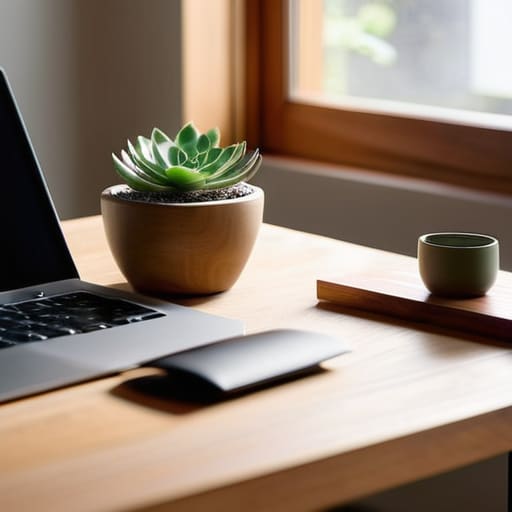
The biggest mistake I see people making isn’t a lack of willpower; it’s a failure of environment design. If your laptop is sitting on the dining table next to a pile of unopened mail and a half-finished laundry basket, your brain is constantly processing those visual cues. You aren’t just working; you’re navigating a minefield of unfinished tasks. Minimizing home distractions starts with physical segregation. You don’t need a dedicated wing of the house, but you do need a designated zone where “work” happens and “life” doesn’t. When you step into that space, your brain needs to receive a clear signal that the rules have changed.
Once the physical space is set, you have to tackle the invisible noise. I’ve learned the hard way that establishing work-life boundaries isn’t just about when you clock out; it’s about protecting your focus while you’re clocked in. This means more than just silencing your phone. It means setting expectations with the people you live with and, more importantly, with yourself. If you haven’t defined when you are “at work,” you’ll find yourself drifting into domestic chores every time a difficult email lands in your inbox. Stop treating your home like a multipurpose playground and start treating your workspace like a tool for precision.
Three Systems to Strip Away the Friction
- Stop relying on willpower and start using physical cues. If you want to focus, your workspace needs to be a dedicated zone, not a corner of your dining table. When I sit in my office, my brain knows it’s time to work because the environment has changed. Use a specific lamp or even a particular coaster to signal to your brain that the “work mode” system is now active.
- Audit your digital clutter with the same scrutiny you’d use for a messy workshop. If you have fifty tabs open, you aren’t multitasking; you’re just creating visual noise that drains your mental battery. Close everything that isn’t essential to the immediate task at hand. A clean desktop—both physical and digital—is the simplest way to lower your cognitive load.
- Build “buffer zones” into your transition periods. One of the biggest mistakes I see is trying to jump straight from a morning coffee to a high-stakes meeting without a reset. Give yourself ten minutes of zero-input time—no phone, no email—to transition between roles. It’s about managing your energy, not just your clock.
The Bottom Line
Stop chasing the perfect, high-tech routine and focus on removing the friction points that actually interrupt your flow.
Your environment is either working for you or against you; build systems that protect your time rather than consuming it.
The Real Cost of Friction
Productivity isn’t about finding a better app or a more complex schedule; it’s about stripping away the environmental friction that drains your energy before you even sit down to work.
Gregory Scott Miller
Stripping Away the Friction
At the end of the day, productivity isn’t about finding a magic app or a complex scheduling hack that requires constant maintenance. It’s about the fundamentals we’ve discussed: building a predictable routine, organizing your physical space to reduce mental load, and aggressively eliminating the distractions that pull you away from deep work. If a system requires more effort to manage than the work it’s supposed to support, it’s a bad system. Focus on the small, practical adjustments—the clear desk, the set start time, the dedicated workspace—and let those simple systems do the heavy lifting for you.
Don’t feel like you have to overhaul your entire life by Monday morning. Start with one single change, see how it affects your flow, and iterate from there. My goal isn’t to turn your home into a rigid corporate cubicle, but to help you build an environment that actually serves your life. When you remove the friction, you stop fighting your surroundings and start reclaiming your time. Now, close the laptop, step away from the screen, and go enjoy the space you’ve worked so hard to optimize.